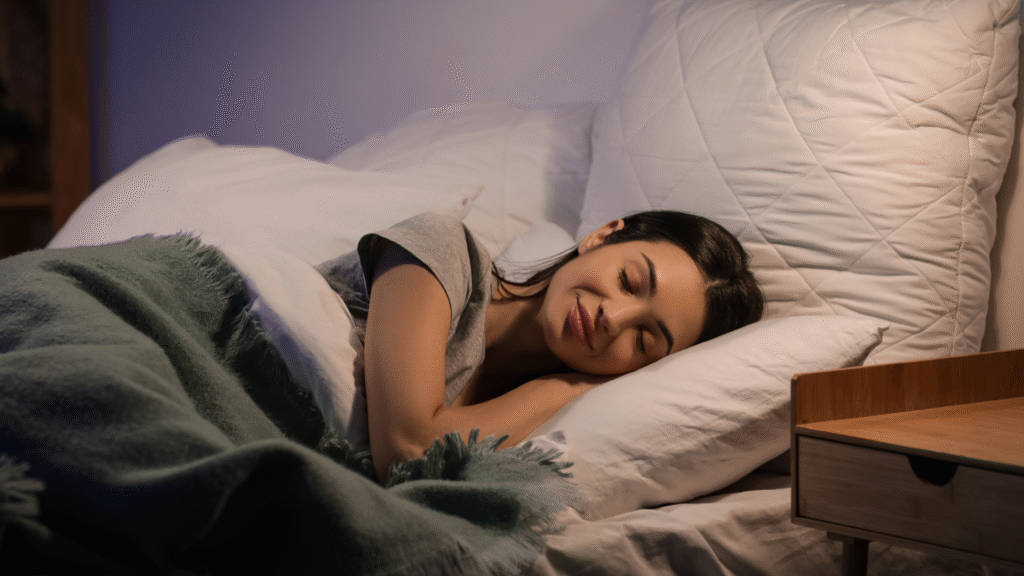
Have you ever laid in bed, staring at the ceiling, wondering why sleep feels so hard when you need it the most? You’re exhausted. Your body wants rest. But your mind? Wide awake, replaying conversations, planning tomorrow, or worrying about things you can’t control.
I’ve been there—countless nights of tossing, turning, and checking the clock every 20 minutes. And through real-life trial, research, and habit-building, I learned something important:
Falling asleep quickly isn’t about luck. It’s about strategy.
This guide will show you how to fall asleep quickly, not with gimmicks, but with techniques that actually work—physically, mentally, and biologically. If you’re searching for how to fall asleep quickly at night, this is your complete, experience-driven roadmap.
Why Falling Asleep Quickly Matters More Than You Think
Sleep isn’t just rest—it’s recovery, repair, and reset.
When you struggle to fall asleep:
- Your stress hormones stay elevated
- Your brain doesn’t detox properly
- Your immune system weakens
- Your focus, mood, and productivity suffer
And here’s the uncomfortable truth: the longer you stay awake in bed, the harder sleep becomes.
So the real question isn’t “How much sleep did I get?”
It’s “How fast did I fall asleep?”
How to Fall Asleep Quickly: Understand the Real Enemy
Before learning techniques, you must understand what’s actually keeping you awake.
The #1 Reason You Can’t Fall Asleep Quickly
It’s not caffeine.
It’s not your mattress.
It’s not even stress alone.
It’s overstimulation.
Your nervous system is stuck in “fight or flight” when it should be in “rest and digest.”
If you want to know how to fall asleep quickly at night, your goal is simple:
Signal safety to your brain.
Everything in this guide does exactly that.
How to Fall Asleep Quickly at Night Using Proven Sleep Triggers
1. Master the 4-7-8 Breathing Technique (Clinically Backed)
This technique changed my sleep forever.
Why it works:
It slows your heart rate, activates the parasympathetic nervous system, and tells your brain you’re safe.
How to do it:
- Inhale through your nose for 4 seconds
- Hold your breath for 7 seconds
- Exhale slowly through your mouth for 8 seconds
- Repeat 4–6 cycles
Most people feel sleepy within 90 seconds.
Want a fast win for how to fall asleep quickly? Start here.
2. The Cognitive Shuffle: Outsmart a Racing Mind
Ever notice how your thoughts become louder the moment you close your eyes?
This technique gently distracts your brain without stimulating it.
How it works:
You imagine random, non-emotional objects in sequence:
- A red apple
- A wooden ladder
- A cloud drifting
- A blue bicycle
No story. No logic. No meaning.
This mimics the brain’s natural transition into sleep.
If overthinking is your issue, this is one of the most underrated answers to how to fall asleep quickly at night.
How to Fall Asleep Quickly by Optimizing Your Environment
Your bedroom should pull you into sleep.
3. Temperature: The Silent Sleep Killer
The ideal sleep temperature is 60–67°F (15–19°C).
Why?
Your core body temperature must drop for sleep to begin.
Pro tip from experience:
Take a warm shower 60–90 minutes before bed. The cool-down afterward triggers sleepiness fast.
4. Darkness Is Non-Negotiable
Even tiny light sources:
- Phone notifications
- LED alarm clocks
- Streetlights
They all suppress melatonin.
Solution:
- Blackout curtains
- Eye mask
- Phone facedown
If you’re serious about learning how to fall asleep quickly, darkness is your ally.
How to Fall Asleep Quickly at Night with a Powerful Pre-Sleep Routine
5. The 30-Minute Wind-Down Rule
You cannot go from emails and social media to deep sleep instantly. Your brain needs a buffer.
My non-negotiable routine:
- No screens 30 minutes before bed
- Low lighting
- Light stretching or reading
- Calm music or white noise
This consistency trains your brain to associate these actions with sleep.
Want sleep to come automatically? Build the ritual.
6. Stop Trying to Sleep (Counterintuitive but Powerful)
The harder you try to fall asleep, the more alert your brain becomes.
Instead:
- Lie down
- Focus on your breath
- Let sleep happen
This mental shift alone dramatically improves how to fall asleep quickly at night.
How to Fall Asleep Quickly Using Nutrition and Timing
7. Avoid These Sleep Saboteurs at Night
Even “healthy” habits can ruin sleep if timed wrong.
Avoid:
- Caffeine after 2 PM
- Heavy meals within 3 hours of bed
- Alcohol (it fragments sleep)
If you want to know how to fall asleep quickly, what you don’t consume matters just as much.
8. Foods That Help You Fall Asleep Faster
From personal testing and research, these work:
- Magnesium-rich foods (almonds, spinach)
- Tart cherry juice (natural melatonin booster)
- Herbal teas like chamomile or valerian
Small changes. Big results.
How to Fall Asleep Quickly at Night When Anxiety Hits
9. Brain Dump: Get Thoughts Out of Your Head
Your brain doesn’t want to forget—it wants to remember.
So let it.
Do this:
- Write everything on your mind
- No filtering
- No organizing
Once it’s on paper, your brain relaxes.
This is one of the most effective tools for anxious sleepers.
10. Progressive Muscle Relaxation (Military-Tested)
Used by soldiers to fall asleep in stressful environments.
How it works:
- Tense a muscle group for 5 seconds
- Release for 10 seconds
- Move from toes to head
Your body physically relaxes—and sleep follows.
How to Fall Asleep Quickly: Habits That Make or Break Sleep
11. Wake Up at the Same Time Every Day
Even on weekends.
Why?
It stabilizes your circadian rhythm, making sleep onset faster at night.
If you fix your mornings, your nights fix themselves.
12. Use Your Bed for Sleep Only
No scrolling.
No work.
No stress.
Your brain must associate your bed with one thing only.
Sleep.
How to Fall Asleep Quickly at Night: Final Takeaway
Let’s be clear—sleep is a skill.
And like any skill, it improves with the right tools, habits, and mindset.
If you’ve been asking:
- Why can’t I fall asleep even when I’m tired?
- How do I shut my mind off at night?
- What actually works to fall asleep faster?
Now you know.
The secret to how to fall asleep quickly isn’t forcing sleep—it’s creating the conditions where sleep has no choice but to happen.
Start with one technique tonight. Then another tomorrow.
Because once you master how to fall asleep quickly at night, everything else in life—focus, mood, energy—gets easier.
Sleep well. You’ve earned it.
Frequently Asked Questions About How to Fall Asleep Quickly
1. How can I fall asleep quickly in under 10 minutes?
To fall asleep quickly in under 10 minutes, you need to calm your nervous system and reduce mental stimulation. Techniques like the 4-7-8 breathing method, progressive muscle relaxation, and keeping your bedroom cool and dark are proven to work fast. Avoid screens at least 30 minutes before bed and focus on slow, deep breathing to lower your heart rate. When practiced consistently, these methods significantly improve how to fall asleep quickly at night.
2. Why do I feel tired but still can’t fall asleep quickly?
Feeling tired but unable to sleep is usually caused by mental overstimulation or stress hormones like cortisol remaining elevated. Your body is exhausted, but your brain is still alert. Overthinking, late-night screen exposure, caffeine, or anxiety can all interfere with sleep onset. To learn how to fall asleep quickly, focus on calming the mind through breathing exercises, journaling, or a structured wind-down routine.
3. What is the fastest proven method for how to fall asleep quickly?
One of the fastest proven methods for how to fall asleep quickly is controlled breathing, especially the 4-7-8 technique. This method activates the parasympathetic nervous system, signaling relaxation to the brain. Another highly effective method is the cognitive shuffle, which gently distracts your mind with neutral imagery, allowing sleep to occur naturally.
4. How can I fall asleep quickly at night when my mind is racing?
If your mind races at night, the key is to redirect attention without stimulation. Writing down your thoughts before bed (brain dumping) prevents mental looping. Pair this with slow breathing or guided imagery. These techniques help reduce anxiety and are especially effective for people searching for how to fall asleep quickly at night despite overthinking.
5. Does using my phone before bed affect how quickly I fall asleep?
Yes, using your phone before bed significantly affects how quickly you fall asleep. Blue light from screens suppresses melatonin production, delaying sleep onset. Additionally, scrolling keeps your brain alert. To improve how to fall asleep quickly, stop using screens at least 30–60 minutes before bedtime and switch to calming activities like reading or light stretching.
6. What foods help with how to fall asleep quickly at night?
Certain foods support faster sleep by promoting relaxation and melatonin production. Foods rich in magnesium (such as almonds and leafy greens), tryptophan (like bananas and oats), and natural melatonin (tart cherry juice) can help. Avoid heavy or spicy meals close to bedtime if you want to fall asleep quickly at night.
7. Can anxiety prevent me from falling asleep quickly?
Yes, anxiety is one of the most common barriers to falling asleep quickly. It keeps the nervous system in a heightened state of alertness. Techniques such as progressive muscle relaxation, deep breathing, and guided meditation can reduce anxiety symptoms. Managing nighttime anxiety is essential for anyone trying to learn how to fall asleep quickly and consistently.
8. What is the best bedtime routine for how to fall asleep quickly?
The best bedtime routine is one that is consistent, calming, and screen-free. A strong routine includes dimming lights, practicing relaxation techniques, avoiding stimulating activities, and going to bed at the same time each night. This trains your brain to recognize sleep cues, making it easier to fall asleep quickly at night.
9. How does room temperature affect how quickly I fall asleep?
Room temperature plays a critical role in sleep onset. The optimal sleep temperature is 60–67°F (15–19°C). A cooler room helps lower your core body temperature, which is necessary for sleep. If your room is too warm, it can delay sleep and disrupt deep rest. Adjusting temperature is a simple but powerful way to improve how to fall asleep quickly.
10. How long does it take to train my body to fall asleep quickly?
Most people begin noticing improvements within 7–14 days of consistent sleep habits. Training your body to fall asleep quickly requires regular sleep and wake times, a structured bedtime routine, and reduced nighttime stimulation. Over time, your circadian rhythm stabilizes, making falling asleep quickly at night feel effortless and natural.