Endometriosis affects roughly one in ten women of reproductive age, and most of them wait years for a diagnosis. Not because the condition is rare or mysterious, but because its symptoms get mistaken for bad periods, irritable bowel syndrome, or stress. If you have been told your pain is normal and it has never quite felt that way, this article is for you.
What Is Endometriosis?
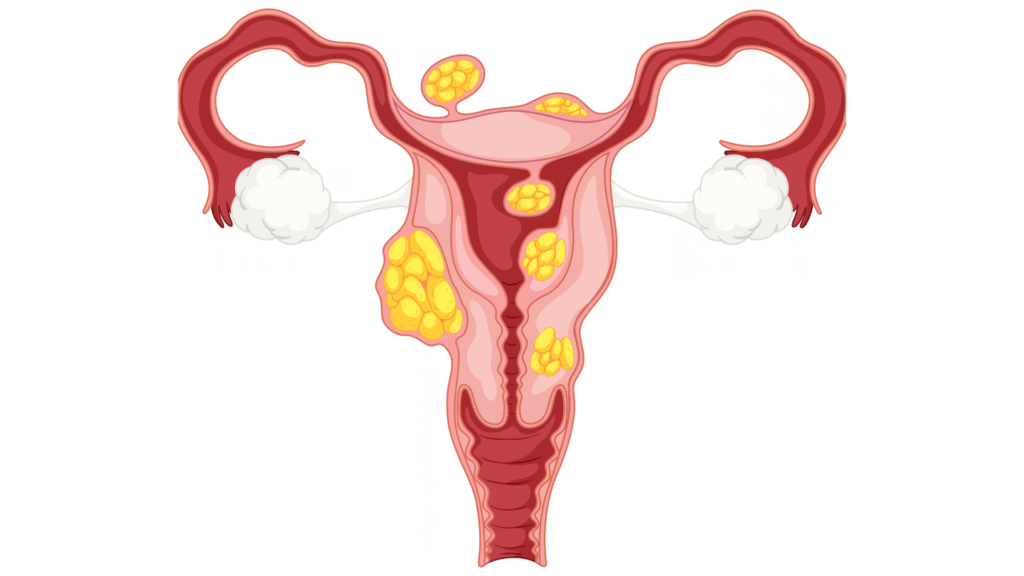
Endometriosis happens when tissue similar to the lining of the uterus grows in places it does not belong: the ovaries, the fallopian tubes, the bowel, the bladder, or the pelvic lining. Each month, this tissue responds to hormonal signals the same way the uterine lining does. It thickens, breaks down, and bleeds. Unlike a normal period, that blood has nowhere to go. It irritates surrounding tissue, triggers inflammation, and over time can lead to scar tissue and adhesions that bind organs together.
This is why endometriosis symptoms rarely stay confined to “just” period pain. The disease can involve the bowel, the bladder, and the nerves running through the pelvis, which explains why so many patients get sent to a gastroenterologist before anyone considers a gynecological cause.
Endometriosis Symptoms You Shouldn’t Wave Away
Some pain during a period is expected. What is not expected is pain that stops you from going to work, pain that outlasts your period, or pain that keeps getting worse year after year. The most common endometriosis symptoms include:
Severe menstrual cramps that do not respond to standard pain relief. Chronic pelvic pain that shows up even outside your period. Pain during or after sex, often described as a deep ache rather than surface discomfort. Painful bowel movements or urination, especially around your cycle. Heavy or irregular bleeding. Bloating and digestive upset that patients often nickname “endo belly.” Fatigue that feels disproportionate to how much you’re actually doing. Difficulty getting pregnant, which for a meaningful share of women is the first sign anything was wrong at all.
Not everyone experiences every symptom, and severity does not always match how advanced the disease is. Someone with minimal endometriosis on imaging can be in agony, while someone with extensive disease can have mild symptoms. That mismatch is part of what makes this condition so easy to miss.
Why Endometriosis Diagnosis Takes So Long
Research on diagnostic delay puts the average wait between symptom onset and confirmed diagnosis somewhere between four and eleven years, with several large studies landing closer to seven to ten years. That gap has three main sources.
The first is cultural. Painful periods are normalized from adolescence onward, so patients often don’t realize their pain is outside the range of normal until someone finally says so. The second is clinical overlap. Bloating, bowel pain, and fatigue look a lot like IBS or generalized stress, so symptoms get treated one at a time instead of connected. The third is historical: for decades, laparoscopic surgery was considered the only way to confirm the diagnosis, which meant many doctors held off diagnosing endometriosis until a patient was already being scheduled for surgery for another reason.
Delays longer than a decade are not unusual, and they carry real consequences. Untreated endometriosis can progress, symptoms can worsen, and the disease can affect fertility the longer it goes unmanaged. Getting an earlier answer matters.
Myth vs Fact on Endometriosis
Myth: You need laparoscopic surgery to diagnose endometriosis. This used to be true, but current gynecological guidance now supports a presumptive clinical diagnosis based on symptoms, pelvic exam findings, and imaging. Surgery is still the only way to confirm the diagnosis with absolute certainty, but a patient no longer has to go under the knife just to start treatment.
Myth: A normal ultrasound rules it out. A standard transvaginal ultrasound can miss superficial lesions and is better at detecting larger endometriomas (cysts) than diffuse disease. A clean scan does not mean endometriosis is off the table if your symptoms strongly suggest it.
Myth: Pregnancy or a hysterectomy cures it. Neither reliably does. Pregnancy can temporarily ease symptoms for some women because of hormonal changes, but it is not a treatment and symptoms typically return. A hysterectomy removes the uterus, not the endometrial-like tissue growing elsewhere, so pain can persist if that tissue is left untreated.
Myth: It only matters if you’re trying to conceive. Fertility is one concern among several. Chronic pain, bowel and bladder symptoms, and quality of life all matter independently of pregnancy plans.
How Endometriosis Is Diagnosed Today
A gynecologist will usually start with a detailed history of your cycle, pain patterns, and any bowel or bladder symptoms, followed by a pelvic exam. From there, a transvaginal ultrasound or, in some cases, an MRI can pick up cysts, deep infiltrating lesions, or signs of adhesions. If symptoms and imaging point strongly toward endometriosis, many gynecologists will start treatment on that basis rather than waiting for surgical confirmation. Laparoscopy remains the definitive diagnostic tool and is used when imaging is inconclusive, when surgery is already being considered for treatment, or when fertility is a pressing concern.
What Actually Helps
Treatment depends on your symptoms, whether you’re trying to conceive, and how the disease is affecting your daily life.
For pain management, options range from anti-inflammatory medication to hormonal therapy that suppresses the menstrual cycle, such as combined oral contraceptives, progestin-only pills, hormonal IUDs, or GnRH agonists for more severe cases. Hormonal treatment doesn’t remove existing tissue, but it can slow progression and meaningfully reduce pain for many women.
For patients with significant lesions, adhesions, or fertility concerns, laparoscopic excision surgery can remove endometrial tissue directly. This is more involved than hormonal management, but it offers relief that medication alone sometimes cannot, and it can improve fertility outcomes in specific cases.
Pelvic floor physiotherapy is underused but genuinely effective for the muscular tension and nerve sensitization that chronic pelvic pain creates over time. Some patients also find that anti-inflammatory dietary changes and regular movement ease bloating and general symptom load, though these are supportive measures rather than substitutes for medical treatment.
None of these approaches is a permanent cure. Endometriosis is a chronic condition that’s managed, not eliminated, which is exactly why an accurate diagnosis and an ongoing relationship with a gynecologist matter more than a one-time fix.
When to See a Gynecologist
If period pain is disrupting your work, sleep, or plans month after month, that’s reason enough to get checked, regardless of whether you’ve noticed every symptom on a list. The same goes for pain during sex, unexplained bowel or bladder pain tied to your cycle, or difficulty conceiving after months of trying. You can book a consultation here to go through your symptoms and figure out the right next step, whether that’s imaging, a treatment trial, or a referral for further evaluation.
Frequently Asked Questions
Can endometriosis be cured?
No. It can be managed effectively with medication, surgery, or a combination of both, but there is currently no permanent cure. The goal of treatment is controlling symptoms and slowing progression, not eliminating the disease entirely.
Does endometriosis go away after menopause?
Symptoms often improve once estrogen production drops after menopause, since the disease is hormonally driven. However, some women on hormone replacement therapy continue to experience symptoms, and existing scar tissue or adhesions don’t disappear on their own.
Is endometriosis hereditary?
Having a mother or sister with endometriosis raises your own risk, which suggests a genetic component, though no single gene has been identified as the cause. Family history is one of several factors gynecologists consider when symptoms are ambiguous.
Can you have endometriosis and still get pregnant naturally?
Yes. Roughly 30 to 50 percent of women with infertility have endometriosis, but that also means many women with the condition conceive without assistance. Severity, location of the tissue, and age all play a role in fertility outcomes.
Why do endometriosis symptoms sometimes get worse instead of better with age?
Left untreated, endometrial-like tissue can continue to grow and cause more scarring and adhesions over time, which is why symptoms often progress rather than plateau. This is one of the main reasons early diagnosis is worth pursuing rather than waiting it out.