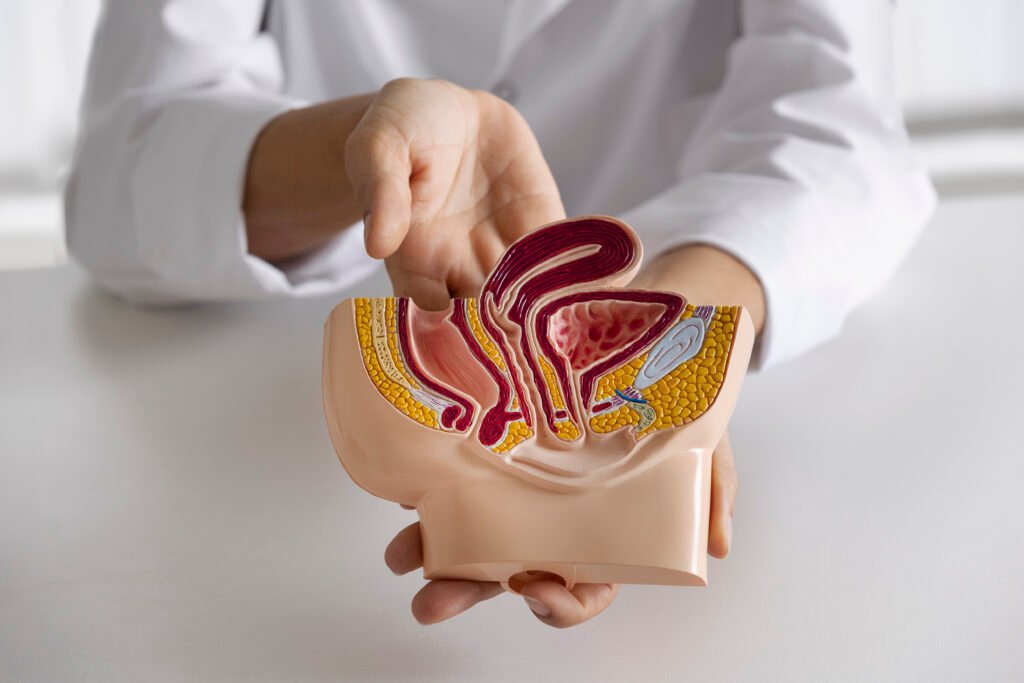
Uterine fibroids are non-cancerous growths of the muscular wall of the uterus, and by the age of 50 the majority of women have at least one. Most cause no symptoms at all and need no treatment. The ones that do cause problems tend to cause the same three: heavy bleeding, pressure, and pain.
What Symptoms Should You Take Seriously?
- Periods heavy enough to soak through protection hourly, or that pass large clots
- Periods lasting longer than seven days
- A feeling of pelvic pressure, fullness or a visibly swollen lower abdomen
- Needing to pass urine frequently, or difficulty emptying the bladder
- Constipation or pressure in the back passage
- Lower back or leg ache without a musculoskeletal explanation
- Pain during sex
- Fatigue and breathlessness – usually from the iron deficiency that heavy bleeding causes
Where the fibroid sits matters more than how large it is. A small fibroid growing into the uterine cavity can cause dramatic bleeding, while a large one on the outer wall may only cause pressure.
Who Is More Likely to Develop Them?
Fibroids grow in response to oestrogen and progesterone, which is why they typically appear in the reproductive years, may enlarge in pregnancy, and usually shrink after menopause. Risk is higher with a family history, with early onset of periods, and with obesity, which raises circulating oestrogen. Women of African descent develop them earlier and more severely. Vitamin D deficiency is consistently associated with fibroids in observational studies, though whether correcting it changes their course is not yet established.
How Are They Diagnosed?
A pelvic ultrasound is usually enough, and is the first test your doctor will arrange. MRI is used when surgery is being planned or when the picture is unclear. A full blood count and ferritin should be checked alongside, because iron deficiency is extremely common in women with heavy fibroid-related bleeding and is frequently missed when only haemoglobin is measured.
What Are the Treatment Options?
| Approach | Suitable when | Notes |
|---|---|---|
| Watchful waiting | No symptoms, or close to menopause | Fibroids usually shrink once oestrogen falls |
| Tranexamic acid | Heavy bleeding is the main issue | Taken only during the period; does not affect fibroid size |
| Hormonal IUD | Heavy bleeding, cavity not distorted | Often dramatically reduces blood loss |
| GnRH analogues | Short-term, usually before surgery | Shrinks fibroids but causes menopausal symptoms |
| Uterine artery embolisation | Symptomatic fibroids, uterus preserved | Avoids major surgery; fertility implications to discuss |
| Myomectomy | Fibroids removed, uterus kept | Preferred where future pregnancy is planned |
| Hysterectomy | Definitive treatment | Ends symptoms permanently; a considered decision |
Can Diet Shrink Fibroids?
No, and I want to be direct about that because the internet is full of claims otherwise. There is no diet, supplement or herbal protocol shown to shrink established fibroids. What nutrition genuinely does is two things: influence the hormonal environment at the margins, and manage the consequences of heavy bleeding.
- Correct iron deficiency. This is the priority. Ask for ferritin, not just haemoglobin – stores fall long before anaemia appears. Pair plant iron sources with vitamin C, and keep tea and coffee an hour away from meals.
- Get vitamin D tested and corrected. Deficiency is near-universal in Indian women and is consistently associated with fibroids.
- Eat plenty of vegetables and fruit. Higher intakes are associated with lower fibroid risk in observational studies.
- Limit alcohol. Alcohol raises circulating oestrogen and is associated with higher fibroid risk.
- Address excess weight if present. Fat tissue produces oestrogen, so weight loss modestly lowers hormonal drive.
- Get enough fibre. It supports oestrogen clearance through the gut and helps with the constipation that pressure symptoms cause.
When Should You See a Doctor?
- Bleeding between periods, after sex, or any bleeding after menopause
- Periods that are interfering with work, sleep or travel
- Rapid abdominal swelling
- Severe pain, particularly if sudden
- Symptoms of anaemia – breathlessness, palpitations, marked fatigue
A fibroid that grows quickly after menopause should always be assessed promptly, since fibroids normally shrink at that stage.
Frequently Asked Questions
Do fibroids turn into cancer?
Malignant change is very rare. The concern is not that a fibroid becomes cancer, but that a rare cancer can occasionally be mistaken for one – which is why rapid growth is investigated.
Will fibroids stop me getting pregnant?
Most do not. Those growing into the uterine cavity can interfere with implantation and are usually the ones considered for removal.
Do fibroids disappear after menopause?
They usually shrink and become symptom-free, though they rarely vanish entirely. Systemic HRT can occasionally keep them active.
Should I avoid soy?
No. Dietary soy has not been shown to worsen fibroids, and moderate intake is fine. Concentrated isoflavone supplements are a different matter and are not advisable without medical guidance.
About the Author
Nidhi Kakar is a nutritionist and the founder of Art of Wellness. She specialises in women’s health through the midlife years, from the mid-30s to the mid-60s, and has guided hundreds of women through perimenopause, menopause, and post-menopause with personalised nutrition and lifestyle plans.
This article is for educational purposes and does not replace personalised medical advice. Speak to your doctor about symptoms, tests and treatment that apply to you.