Urinary incontinence is the involuntary leaking of urine, and while it becomes more common with age, it is never something you simply have to live with. Around one in three women over 40 experiences it to some degree, yet most wait years before mentioning it to anyone. That delay matters, because the first-line treatment works well and works best early.
What Does the Pelvic Floor Actually Do?
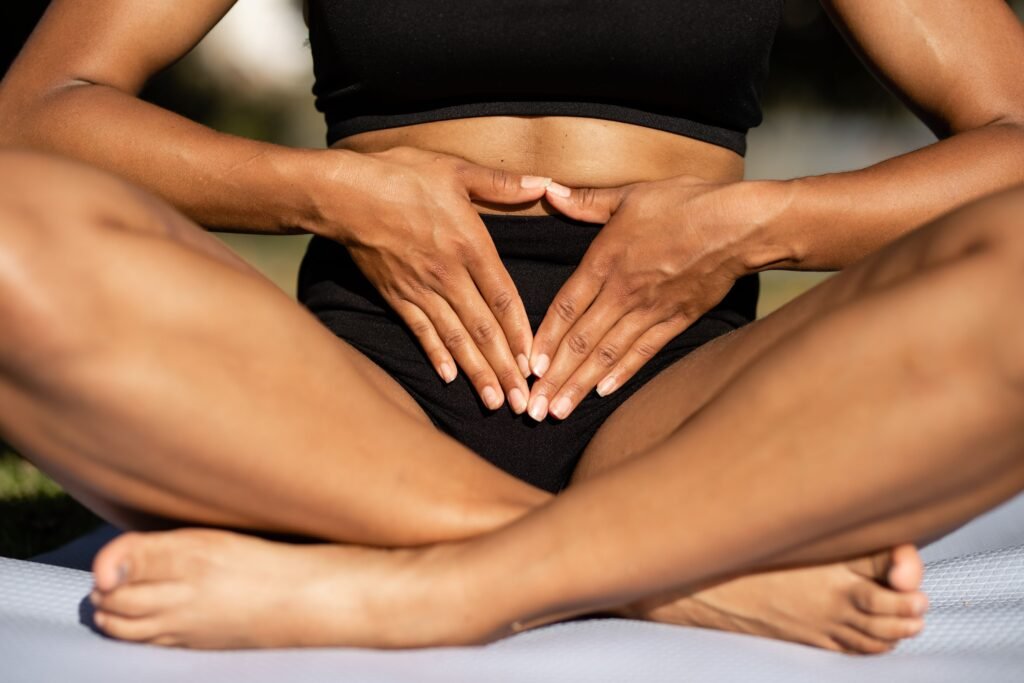
The pelvic floor is a hammock of muscle and connective tissue slung between your pubic bone and tailbone. It supports the bladder, uterus and rectum, controls both openings, contributes to core stability and plays a part in sexual function. When it weakens, the consequences show up across all of those at once – which is why leaking, low back ache and a feeling of heaviness so often arrive together.
What Are the Different Types of Incontinence?
| Type | What triggers it | What is happening |
|---|---|---|
| Stress incontinence | Coughing, sneezing, laughing, lifting, jumping | Pelvic floor cannot resist a sudden rise in abdominal pressure |
| Urge incontinence | A sudden desperate need, often with running water or arriving home | Bladder muscle contracts before you are ready |
| Mixed | Both of the above | The most common pattern in women over 50 |
| Overflow | Constant dribbling, poor stream | Bladder does not empty properly – needs medical assessment |
Identifying which type you have is not academic. Stress incontinence responds to strengthening. Urge incontinence responds to bladder retraining. Doing the wrong one for months is the usual reason women conclude that pelvic floor exercises do not work.
Why Does It Get Worse Around Menopause?
Several things converge in the same decade. Falling oestrogen thins the tissue of the urethra and vaginal wall, reducing the seal that holds urine in. Collagen quality declines, so the supporting ligaments become less springy. Muscle mass falls throughout the body, and the pelvic floor is not exempt. Add the cumulative effect of pregnancy, vaginal delivery, chronic constipation, a persistent cough or years of heavy lifting, and the load finally exceeds what the tissue can hold.
Weight is a genuine factor too. Extra abdominal weight increases the downward pressure on the pelvic floor with every step, and losing five to ten per cent of body weight measurably reduces leaking episodes in trials.
How Do You Do Pelvic Floor Exercises Correctly?
Most women doing Kegels are doing them wrong – squeezing the buttocks and abdominals instead, or holding their breath. The contraction you want is a gentle lift around the vagina and back passage, as though stopping wind, with everything else relaxed.
- Find it first. Sit comfortably, breathe out, and lift. You should feel a subtle inward movement, not a visible clench of the thighs or bottom.
- Train both fibre types. Do eight to twelve slow holds of six to ten seconds each, then ten quick, sharp lifts. That covers endurance and the fast response you need when you sneeze.
- Three sets a day, every day. Attach them to fixed cues – brushing teeth, waiting for the kettle, sitting in traffic.
- Use the knack. Consciously lift before you cough, sneeze or lift something heavy. This alone reduces leaking substantially.
- Give it three months. Muscle takes that long to change. Improvement usually begins around week six.
- Get assessed if nothing changes. A women’s health physiotherapist can check your technique internally, and roughly a third of women cannot contract correctly without that guidance.
What Else Helps?
- Treat constipation properly. Straining is one of the most damaging things you can do to a pelvic floor. Adequate fibre and fluid are not optional here.
- Reduce bladder irritants if you have urge symptoms – caffeine, fizzy drinks, artificial sweeteners and alcohol are the usual offenders.
- Do not restrict fluid. Concentrated urine irritates the bladder and makes urgency worse. Aim for pale straw-coloured urine.
- Stop going ‘just in case’. Habitual pre-emptive emptying trains the bladder to signal at smaller and smaller volumes.
- Bladder retraining for urgency. When the urge hits, stop still, do several quick pelvic floor lifts, breathe, and wait for the wave to pass before walking calmly to the toilet.
- Ask about vaginal oestrogen. For post-menopausal women, low-dose local oestrogen improves tissue quality and often reduces both leaking and urgency.
When Should You See a Doctor?
Book an appointment rather than waiting if you notice any of the following:
- Blood in your urine
- Pain or burning on passing urine, or repeated urinary infections
- A bulge or dragging sensation in the vagina, which may indicate prolapse
- Sudden onset of incontinence, or leaking with new back pain or leg weakness
- Difficulty emptying your bladder, or a weak stream
- Symptoms that are affecting your work, exercise or social life at all
That last point is the one women dismiss most often. Avoiding a run or a long car journey is a reason to seek help, not a reasonable adaptation.
Frequently Asked Questions
Is a bit of leaking normal after having children?
Common, yes. Normal, no. Postnatal leaking that persists beyond three months should be assessed, and it responds far better to treatment then than twenty years later.
Should I stop running or lifting weights?
Generally no. Both are valuable for bone and muscle. Work with a physiotherapist on load and technique rather than giving up impact exercise altogether, which tends to make the underlying weakness worse.
Do vaginal weights or trainer devices work?
They can help with feedback if you already know how to contract correctly. They are no substitute for learning the movement properly first.
Will surgery be necessary?
For most women, no. Supervised pelvic floor muscle training resolves or substantially improves the majority of stress incontinence. Surgery is considered when conservative treatment has genuinely been tried and has not worked.
About the Author
Nidhi Kakar is a nutritionist and the founder of Art of Wellness. She specialises in women’s health through the midlife years, from the mid-30s to the mid-60s, and has guided hundreds of women through perimenopause, menopause, and post-menopause with personalised nutrition and lifestyle plans.
This article is for educational purposes and does not replace personalised medical advice. Speak to your doctor about symptoms, tests and treatment that apply to you.